Thesavanna Features
Exploring the North East Region: Ghana’s Land of Ancient Kingdoms and Sacred Traditions
Explore Ghana’s North East Region! Discover the Nayiri Palace, Gambaga Escarpment, Koma figurines, festivals, and cultural heritage in Nalerigu.


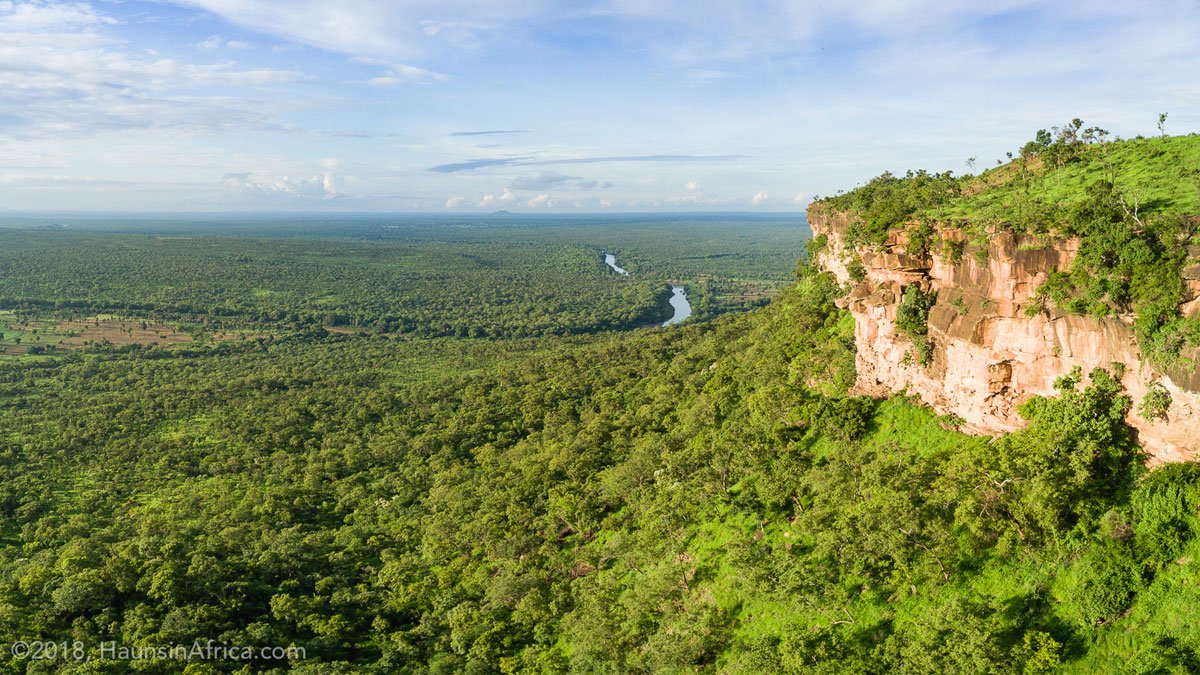
The North East Region stands as one of Ghana’s youngest and most historically significant administrative areas. In this land, ancient kingdoms, sacred traditions, and breathtaking natural landscapes converge. Carved out of the former Northern Region in December 2018 following a successful referendum, this region has its capital at Nalerigu in the East Mamprusi Municipal Assembly.
Thesavannaonline’s series on the regions that make up the North of Ghana is part of efforts to correct a common misconception—that the entire expanse of land north of the Ashanti Region is a single, homogenous territory. In reality, Northern Ghana is a rich tapestry of five distinct regions: the North East Region, the Upper East Region, the Upper West Region, the Savannah Region, and the Northern Region itself. This article focuses on the North East Region—the heartland of the Mamprusi Kingdom, a territory of escarpments, waterfalls, and living history waiting for you.


Table of Contents
An Overview of the Land and Its People
The North East Region is situated in the northern part of Ghana, covering approximately 9,072 square kilometres, making it larger than the Upper East Region (8,842 km²), the Ahafo Region (5,193 km²), and the Greater Accra Region (3,245 km²). According to the 2021 Population and Housing Census, the region has a population of 658,946, ranking 14th in Ghana by population and 13th by land size.
The North East Region occupies a strategically significant position in the northernmost part of Ghana, serving as a transitional zone between the country’s interior and its eastern neighbour, Togo.
To the north, the North East Region borders the Upper East Region, Ghana’s smallest but most densely populated northern region. This boundary follows the latitude that separates the districts of Bawku West from the North East’s Bunkpurugu-Nyankpanduri and East Mamprusi districts. The proximity to the Upper East Region means that the North East shares cultural similarities with its northern neighbour, including the presence of related ethnic groups and historical connections through the Mossi and Mamprusi kingdoms.
To the east, the region borders the Republic of Togo. This boundary stretches approximately 150 kilometres, running through remote, rugged terrain that includes parts of the Bunkpurugu-Nyankpanduri and Chereponi districts. The border area has historically been a zone of cultural exchange and migration, with ethnic groups such as the Konkomba, Bimoba, and Moba straddling both sides of the colonial-era boundary. Towns like Bunkpurugu and Chereponi serve as important cross-border trading posts, where Ghanaian and Togolese traders exchange goods including agricultural produce, livestock, and manufactured items.
To the south, the region borders the Northern Region, Ghana’s largest and most populous northern administrative area. The boundary between the two regions runs roughly through sparsely populated savannah terrain, with the Northern Region’s capital.
To the west, the region borders the Upper West Region, specifically the Sissala East Municipal and parts of the Sissala West District. This western border is less trafficked than the eastern and southern boundaries. Nonetheless, it represents an important connection between the Mamprusi heartland and the Sisaala and Wala communities to the west.
The North East Region experiences a climate similar to that of the neighbouring Savannah Region, characterized by distinct wet and dry seasons. The wet season typically runs from June to November, while the dry season spans the remaining months. However, as the effects of climate change play out, these seasons may change.
Languages of the North East Region
The North East Region is distinguished by its remarkable linguistic diversity, reflecting the complex tapestry of ethnic groups, historical migrations, and cultural interactions that have shaped this part of Ghana over the centuries. While English serves as the official language, everyday life in the region is characterised by a wide variety of indigenous languages belonging primarily to the Gur subfamily of the Niger-Congo language family.
The dominant language of the region is Mampruli, also known simply as Mamprusi. It is the language of the Mamprusi people, who form the traditional aristocracy and constitute the largest ethnic group in the area. Mamprugu Traditional Area has several towns and villages. These include the regional capital, Nalerigu; the historic town of Gambaga; the commercial centre of Walewale; and Kpasenkpe, Duu, Wulugu, Nabari, Sariba, and Karimenga, among other surrounding communities.
The Konkomba language, known natively as Likpakpaln, is widely spoken throughout these areas, reflecting the substantial Konkomba population that has historically inhabited the borderlands between Ghana and Togo. In the North East Region, Konkomba communities are within the Chereponi District and parts of the Bunkpurugu-Nyankpanduri District, with Chereponi serving as a major centre. The Konkomba people, who refer to themselves as Bikpakpaam, are considered among the aboriginal peoples of northern Ghana.
Alongside Konkomba, the Bimoba language is spoken by the Bimoba people, who inhabit an area covering the eastern part of the Bunkpurugu-Nyankpanduri District, with Bunkpurugu itself as the chief town. The Bimoba people also extend into the Chereponi District and into Togo across the border. The relationship between the Bimoba of Ghana and the Moba of Togo presents a particularly interesting linguistic situation. Historical accounts suggest that the Moba people migrated south from Feda Ngourma in Burkina Faso towards the end of the seventeenth century, and were later driven north by Mamprusi and Dagomba forces, using Chokosi mercenaries, into the area they now inhabit.
The Moba language is primarily spoken in Ghana by communities in the eastern border areas, particularly within the Bunkpurugu-Nyankpanduri District. However, its heartland lies across the frontier in Togo, where the Moba people constitute a major ethnic group.
Similarly, the Mossi language, also known as Mooré, is spoken by communities with historical ties to the Mossi Kingdoms of Burkina Faso, particularly in settlements near the border and among migrant communities who have moved south over generations. The presence of Mossi speakers in the North East Region reflects centuries of interaction, migration, and trade between the Mamprusi Kingdom and its northern neighbours.
Several other languages contribute to the region’s linguistic richness. The Tampulma language is spoken primarily by the Tamprusi people, whose main population centres lie in the North Gonja District of the neighbouring Savannah Region. However, some Tamprusi communities are also in the East Mamprusi District of the North East Region, where they relocated during the seventeenth century. This historical movement of Tamprusi speakers into Mamprusi territory has created pockets of Tampulma speakers within the broader Mampruli-speaking landscape, demonstrating the fluidity of ethnic boundaries and the long history of migration that has shaped the region.
The Kusaal language, spoken predominantly in the Upper East Region by the Kusaasi people, is also heard in the northern parts of the North East Region, particularly along the border with the Upper East, and among migrant communities who have settled in areas near Bawku and Pusiga. The Kusaasi people, whose traditional state is Kusaug, occupy six administrative districts in the Upper East Region, including Bawku East, Bawku West, Pusiga, Garu, and Tempane, with Bawku serving as their capital. Their presence in the North East Region is primarily in border communities and among families who have moved south over generations.
The Dagbani language, the tongue of the Dagomba people and the lingua franca of the neighbouring Northern Region, functions as an important trade language in the southern portions of the North East Region, especially in towns along the route to Tamale and in markets where traders from different linguistic backgrounds converge.
What makes the linguistic situation of the North East Region particularly fascinating is the high degree of multilingualism among its inhabitants. It is common to encounter individuals who speak two, three, or even four languages, fluidly switching between Mampruli, Konkomba, Dagbani, and Hausa depending on the context and their conversation partners. This multilingual competence is not merely practical but reflects a deep-seated cultural orientation toward hospitality, trade, and peaceful coexistence among diverse communities.
For visitors to the North East Region, encountering this linguistic richness offers a window into the sophisticated social fabric that has enabled diverse peoples to share this land for centuries. Whether in the bustling markets of Walewale, the historic precincts of Nalerigu, the border towns of Bunkpurugu and Chereponi, or the remote villages along the Gambaga Escarpment, the voices of the North East Region speak in many tongues, each telling a story of migration, settlement, and the enduring ties that bind communities together.


Major Towns and Administrative Divisions
The North East Region has six Metropolitan, Municipal, and District Assemblies (MMDAs), comprising 2 Municipal Assemblies and 4 District Assemblies. Each of these administrative units has unique characteristics, history, and economic significance, contributing to the region’s rich tapestry.
The Six Districts of the North East Region
East Mamprusi Municipal (Capital: Nalerigu) stands as the political, traditional, and administrative heart of the region. As the seat of the Nayiri, the Overlord of the Mamprugu Traditional Area, Nalerigu is home to the historic Nayiri Palace and serves as the regional capital. With a population of 121,009 according to available census data, it is the most populous district in the region. The town itself dates back centuries. It once had a defensive wall built by Naa Jaringa during the 16th century to protect against slave raiders. Today, Nalerigu is emerging as the region’s educational hub, hosting the College of Health Sciences, Nalerigu Secondary School (NASS), and the renowned Baptist Medical Centre, which serves the entire region.
West Mamprusi Municipal (Capital: Walewale) serves as the region’s primary commercial gateway. Located along the National Highway 10 (N10), which connects Tamale to the Upper East Region, Walewale is a bustling transit hub where traders and travellers converge. The town has grown significantly due to its strategic location. It serves as a major market centre for agricultural produce from surrounding farming communities. It is also the hometown of several prominent Ghanaian political figures, including the Vice President.
Bunkpurugu-Nyankpanduri District (Capital: Bunkpurugu) occupies the eastern portion of the region along the Togolese border. This district is largely hilly terrain with a diverse ethnic composition, including significant Konkomba and Bimoba populations. The area is known for its remote, rugged beauty and its proximity to several natural attractions, including parts of the Gambaga Escarpment. The district capital, Bunkpurugu, serves as a local administrative and trading centre for communities along the border.
Chereponi District (Capital: Chereponi) is another border district in the eastern part of the region, with a population of approximately 55,932. Chereponi town, the district capital, has historically served as a meeting point for different ethnic groups and as a trading hub connecting Ghana and Togo. The district’s economy is predominantly agricultural, with yams and cereals being major crops.
Mamprugu-Moagduri District (Capital: Yagaba) is one of the more remote districts in the region, located in the western portion of the Mamprugu Traditional Area. Yagaba serves as the administrative centre for this largely rural district, where traditional governance structures remain strong, and community life revolves around the agricultural calendar.
Yunyoo-Nasuan District (Capital: Yunyoo) completes the region’s administrative map. This district, like others, is predominantly rural, with communities engaged in subsistence farming and livestock rearing. The district capital, Yunyoo, provides administrative services and serves as a local market centre.
The Significance of Nalerigu as Regional Capital
Among all these towns, Nalerigu holds a special place. Beyond its role as the administrative capital, it is the spiritual and traditional heart of the Mamprusi kingdom. The Nayiri’s palace is not merely a residence but a living institution that has guided the people of this region for centuries. The town’s history as a fortified settlement, its walls built to withstand slave raiders, speaks to the resilience of its people.
Today, Nalerigu is transforming into a modern regional capital while preserving its deep historical roots, housing key institutions such as the Baptist Medical Centre—a private hospital established in 1958 that serves over 200 patients daily and remains the region’s main hospital. This blend of ancient tradition and modern development makes Nalerigu a fitting capital for a region that honours its past while building its future.
Cultural Heritage and Traditions
The culture of the North East Region is synonymous with the Mamprusi Kingdom and its ways. The Kingdom is one of Ghana’s oldest and most significant traditional states. The Nayiri, the King of Mamprugu, holds considerable cultural and political influence, with his palace in Nalerigu serving as a living museum of tradition. According to the Births and Deaths Registry, the Nayiri’s paramountcies extend beyond the boundaries of the North East Region and even the nation, with influential chiefs including the Wulugu Naaba, Wungu Naaba, Soo Naaba, Kulgu Naaba, and others, who reach into the Upper East Region.
Festivals and Chieftaincy
Festivals are an integral part of life in the North East Region, celebrating historical events, harvests, and the legacy of ancestral heroes.
Damba Festival: Celebrated by the Mamprusi people (and other ethnic groups across northern Ghana) to mark the birth of the Prophet Mohammed. It is a two-day festival full of pageantry and showmanship, featuring elaborate processions, drumming, dancing, and horse riding. While originally linked to Islam, it has taken on a traditional character, celebrating chieftaincy and heritage.
Bugum (Fire) Festival: Another significant traditional celebration observed in the region, featuring torch-lit processions to commemorate a legendary search for a lost child.
Harvest Festivals: Various communities celebrate the end of the farming season with thanksgivings, displays of farm produce, and traditional music and dance.
Craftsmanship: Smock Weaving, Leather Works, and Traditional Hats
The North East Region is renowned for its distinctive handicrafts, which share similarities with neighbouring regions but bear unique local patterns and designs reflecting Mamprusi heritage.
Smock (Fugu) Weaving: The handwoven fugu, also known as a batakari in other parts of Ghana, is a hallmark of North East Region fashion, worn for both ceremonial occasions and everyday wear. Smock weaving techniques vary, with different patterns and designs representing different clans or lineages within the Mamprusi kingdom. The fabric is typically handwoven from cotton threads, which may be dyed in distinctive colours—often indigo, white, and earth tones—creating the characteristic striped or checkered patterns. The evolution of this cotton costume in northern Ghana shows traces of Muslim influences from trans-Saharan trade routes, with the technologies of cotton weaving, yarn dyeing, and sewing historically well established in the north.
Leather Works: Artisans in the region are skilled in leatherworking, creating intricate saddles, bags, and ornaments, often with designs that reflect the region’s royal traditions.
Traditional Hats: Worn alongside the smock, these hats feature distinctive local styles that vary by community and occasion. The primary material used for these traditional hats in northern Ghana is veta vera straw, also known as elephant grass. This locally sourced grass is harvested from the tips of stalks, split vertically, and tightly twisted to add strength. Some hats may incorporate leather elements or be dyed in natural colours to create patterns, with the final product serving both practical sun protection and ceremonial purposes.
Indigenous Architecture
Traditional architecture in the region features round mud houses with flat or conical roofs, designed to provide cool and comfortable living spaces in the hot, dry climate. These structures, often featuring courtyards and granaries, reflect the region’s architectural ingenuity and adaptation to its environment.
Cuisine
The local cuisine is hearty and rooted in the region’s agricultural production.
Tuo Zaafi (TZ): The staple food, a smooth, thick porridge made from maize or millet, often served with soups made from leafy greens.
Local Beverages: Popular drinks include Zoum and Pua, traditional fermented or non-alcoholic refreshments.
Higher Learning Educational Institutions
The educational landscape of the North East Region is developing steadily, with a growing infrastructure spanning tertiary, second-cycle, and basic education levels. Below is a structured overview of educational institutions from the highest to the lowest levels.
While the North East Region currently does not host a fully-fledged independent public university, it possesses significant tertiary-level institutions that serve the region and beyond.
College of Health Sciences, Nalerigu: The most prominent tertiary institution in the region is the College of Health Sciences in Nalerigu, which functions as a campus of the University for Development Studies (UDS). This institution trains medical doctors, nurses, and other health professionals to address critical healthcare needs in northern Ghana. Its location adjacent to the Baptist Medical Centre provides students with practical clinical experience.
Baptist Medical Centre as a Teaching Facility: While primarily a healthcare facility, the Baptist Medical Centre in Nalerigu, established in 1958 and serving over 200 patients daily, functions as a practical training ground for health professions students and is the main hospital serving the entire region.
Business and Investment Opportunities
The North East Region offers investment opportunities with vast untapped potential.
More than 85% of the economically active population is engaged in agriculture, making it the backbone of the regional economy. The low population density presents opportunities for large-scale commercial farming. Key Crops include Cereals (maize, millet, sorghum), yams, and legumes.
Bee Farming: The region has significant potential for honey production and beekeeping, which could create jobs and generate export revenue.
The vast savannah grasslands are ideal for cattle rearing, sheep and goat production, and present opportunities for commercial ranching and meat processing.
Nightlife and Social Life in the North East Region
The social life in the North East Region, like its neighbours, is deeply rooted in community, culture, and tradition rather than urban nightclubs.
Festivals as High Points: The most vibrant social events are the festivals. The Damba Festival and Bugum (Fire) Festival transform towns with drumming, dancing, and a palpable sense of communal joy.
Top Tourist Attractions in the North East Region
The North East Region is home to some of Ghana’s most significant historical and natural attractions, many of which remain undiscovered by mainstream tourism.
Gambaga Escarpment
A stunning geological formation that stretches across the region, offering breathtaking views of the surrounding savannah. The escarpment is home to the historic town of Gambaga and provides excellent hiking opportunities.

White Volta and Red Volta Rivers
These major rivers flow through the region, providing scenic landscapes, fishing opportunities, and cultural significance to the communities along their banks.
Nayiri Palace, Nalerigu
The residence of the King (Overlord) of the Mamprugu Traditional Area, this palace is a living museum of Mamprusi history and culture. Visitors can learn about the Kingdom’s traditions, see royal regalia, and witness the enduring power of chieftaincy.
Nalerigu Defence Wall (Naa Jeringa Wall)
A historic wall in Nalerigu was built in the 16th century by Naa Jaringa, using stones and mud, encircling the town. Mainly to protect the town against slave raiders, given its location along the historic slave route between Ouagadougou (Burkina Faso) and Djenne (Mali). It stands as a solemn reminder of the region’s turbulent past.
Ancient Rock Art
The region is home to ancient rock art at several sites, including Gingana, Kpatiritinga, Jilik, and Tusugu. These petroglyphs offer a glimpse into the prehistoric cultures that inhabited the area.
Ancient Koma Figurines, Yikpabongo
One of Ghana’s most significant archaeological discoveries, the Koma figurines are ancient terracotta artifacts found in the Yikpabongo area. These figurines, depicting human and animal forms, date back hundreds of years and provide insight into early spiritual practices.
Buyuori Cave, Yikpabongo
A cave near Yikpabongo with historical and spiritual significance, worth exploring for those interested in the region’s heritage.
Gravesites of Ancient Mamprusi and Mossi Kings, Gambaga
Located in Gambaga, these burial sites honour the monarchs who shaped the history of the Mamprusi kingdom and its relationship with the Mossi people of Burkina Faso.
Zayaa Mosque/Shrine, Wulugu
A historic mosque and shrine that reflects the deep Islamic traditions intertwined with indigenous beliefs in the region.
Doves Caves (Ŋmana Feeri), Nalerigu
A group of rocky outcrops near Nalerigu has cultural significance.


Exploring Northern Ghana: A Region-by-Region Guide
The North East Region is just one piece of the captivating puzzle that is Northern Ghana. Together, five distinct regions shatter the misconception of a monolithic “north” and reveal a land of incredible cultural and geographical diversity, each with its own stories to tell and treasures to share. We encourage you to explore our complete series of guides.
Upper East Region: Discover the land of the Tongo Hills, the sacred crocodile ponds of Paga, and the vibrant craft markets of Bolgatanga, famous for the intricate Bolga baskets. Read our full guide to the Upper East Region here.
Upper West Region: Journey to Ghana’s “Rice Bowl,” home to the community-led Wechiau Hippo Sanctuary, the historic Gwollu Defence Wall, and the mysterious Naa Gbewaa Shrine. Explore the Upper West Region in our dedicated article.
Savannah Region: Explore Ghana’s largest region, home to Mole National Park, the ancient Larabanga Mosque, and the solemn Salaga Slave Market. Discover the Savannah Region in our comprehensive guide.
Northern Region: As the historic heart of the Dagbon Kingdom, the Northern Region (with its capital, Tamale) offers bustling markets, the ancient town of Yendi, and a deep dive into the rich traditions of the Dagomba people.
Why Visit the North East Region?
The North East Region offers an authentic, off-the-beaten-path experience for the intrepid traveller. It is a place for:
History Enthusiasts: Ancient kingdoms, royal palaces, slave walls, and archaeological treasures like the Koma figurines.
Cultural Travellers: Vibrant festivals like Damba and Bugum, traditional smock weaving, and living chieftaincy traditions.
Nature Lovers: Stunning escarpments, rivers, and sacred natural sites.
Adventure Seekers: Hiking the Gambaga Escarpment, exploring caves, and discovering ancient rock art.
Conclusion
The North East Region is a land of profound historical depth and stunning natural beauty. As one of Ghana’s newest regions, it holds some of the country’s most ancient and significant cultural treasures. From the royal precincts of the Nayiri Palace in Nalerigu to the ancient figurines of Yikpabongo, from the heights of the Gambaga Escarpment to the White & Black Volta, this region offers a journey into the soul of the Mamprusi people and the broader heritage of northern Ghana.
While development is still unfolding, the authenticity and warmth of its people, combined with its untapped tourism potential, make the North East Region a destination for those seeking to understand Ghana’s diverse and magnificent heritage truly. And when you explore it alongside the Upper East, Upper West, Savannah, and Northern Regions, you finally grasp the full tapestry of Ghana’s north.