Thesavanna Features
Part Two: The First Republic (1960–1966) – Northern Service Under Nkrumah
Discover Northern Ghana First Republic Politicians. From Ebenezer Adam to Akantigsi Afoko…Tolon Naa… Exclusive to Thesavannaonline.


Northern Ghana First Republic Politicians: Welcome to our Northern Ghana’s Political Architects Series, exclusive to www.thesavannaonline.com. In Part One of our series, we explored the pioneering generation of northern politicians who organized under the Northern People’s Party in 1954 to fight for regional representation in the pre-independence Legislative Assembly.
We met the founders—Tolon Naa Yakubu Tali, Simon Diedong Dombo, Mumuni Bawumia, J. A. Braimah, Abayifa Karbo, C.K. Tedam, Jatoe Kaleo, and Kpembewura Imoro Salifu—who laid the foundation for northern political engagement and ensured that when Ghana achieved independence in 1957, the Northern Territories would not be marginalized in the new nation. We witnessed their navigation of the Avoidance of Discrimination Act, their merger into the United Party, and their establishment of a tradition of northern political leadership that would endure for generations.
We also met figures like Akantigsi Afoko, who, though not a founding member of the Northern People’s Party, was an important northern parliamentarian whose political journey from the CPP to the NPP and back again reflected the complex choices facing northern politicians during this formative era. His service from 1951 to 1966 exemplified the dedication of northern representatives to their constituents across changing political landscapes.
Now, in Part Two, we turn to Northern Ghana First Republic Politicians—the era of Kwame Nkrumah’s presidency, the consolidation of one-party rule, and the continued service of northerners in parliament, regional administration, and diplomacy. The pioneers we met in Part One did not disappear with the dissolution of the Northern People’s Party. Many continued to serve within the new political framework, adapting to the realities of CPP dominance while maintaining their commitment to northern development. Their stories reveal the resilience of northern political engagement and the depth of their dedication to the nation they had helped to build.
The Dawn of Republican Ghana
When Ghana became a republic on July 1, 1960, the nation embarked on a new chapter in its political journey. The ceremonial ties to the British monarchy were severed, and Kwame Nkrumah assumed the office of executive president after winning the republic referendum with an overwhelming 88.47 percent of the vote. For the people of the Northern Territories, now formally incorporated as the Northern and Upper Regions of the new republic, this era brought both opportunities and challenges. The regional advocacy that had characterized the Northern People’s Party gave way to participation in the dominant national movement, and northern politicians who chose to serve in Nkrumah’s government found themselves navigating the complex currents of revolutionary politics.
The First Republic would last six years, ending abruptly with the military coup of February 24, 1966. In that time, a remarkable group of northerners served as members of parliament, regional ministers, and diplomatic representatives, contributing to national governance while advocating for the development of their home regions. Their stories illuminate a period of Ghanaian history that is often viewed through the lens of Nkrumah’s personality, but which, in reality, was shaped by many hands, including those of the indomitable political architects of the North.


Table of Contents
The Political Landscape of the First Republic
The First Republic operated under the 1960 Republican Constitution, which concentrated significant power in the presidency. Nkrumah’s Convention People’s Party dominated the political landscape. Following the passage of the Avoidance of Discrimination Act in 1957 and the Preventive Detention Act in 1958, opposition politics became increasingly difficult. In February 1964, Ghana formally became a one-party state through a constitutional referendum, and all 198 MPs elected in the 1965 parliamentary election were CPP members.
For northern politicians, this environment required adaptation. The regional party they had built—the Northern People’s Party—had merged into the United Party in 1957, and the United Party itself faced increasing harassment and restriction. Many northerners who had been active in regional politics chose to join the CPP, seeing participation in the ruling party as the most effective way to continue advocating for northern interests. Others remained in opposition, facing imprisonment and persecution for their political beliefs.
Despite these challenges, northern representation in parliament and government continued throughout the First Republic. The CPP recognized the importance of including northern voices in its ranks, and several northerners rose to prominent positions in the Nkrumah administration.
Ebenezer Adam: The Man Who Named the CPP
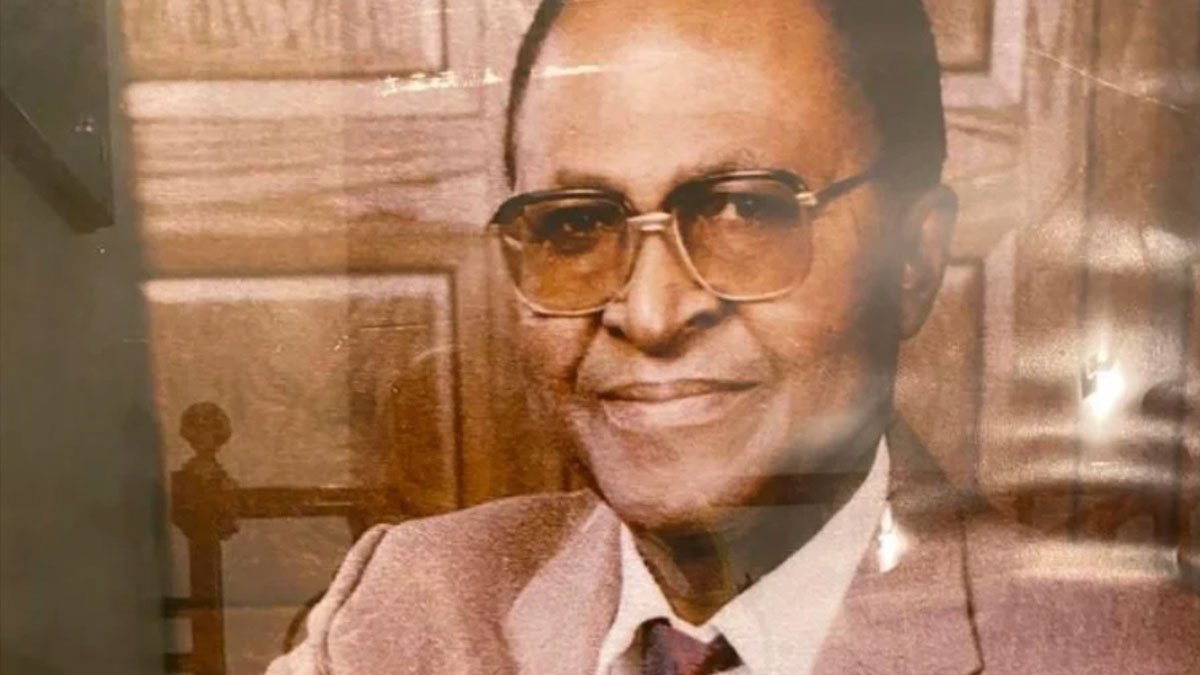
Among the most remarkable northern figures of the First Republic was Ebenezer Adam, a man whose contributions to Ghanaian political history extended far beyond his own service in parliament and government. Born in Tamale in 1919, Adam’s early life reflected the educational opportunities that were slowly opening to northerners under colonial rule. He attended the Government Boarding School in Tamale from 1927 to 1934, then proceeded to Achimota College, where he studied from 1936 to 1939 alongside future luminaries, including Tolon Naa Yakubu Tali and many others who would shape the nation’s destiny.
After completing his education, Adam worked as a teacher in Methodist mission schools in Asokore, Bekwai, Kumasi, and Tamale from 1940 to 1949. But his true calling lay in politics. In 1950, he gave up teaching to join the Convention People’s Party, and his organizational talents were recognized almost immediately. He was appointed propaganda secretary for the party in the Northern and Upper Regions, a position he held from 1950 to 1957.
Adam’s most enduring contribution to Ghanaian political history is the name of the party itself. According to accounts published at the time of his death, it was Ebenezer Adam who suggested the name “Convention People’s Party” to the party’s founders, and his suggestion was accepted. This single act placed him at the very foundation of the political movement that would lead Ghana to independence.
His service to the nation extended beyond party organization. In 1957, he was a member of the first Ghanaian delegation to the United Nations, representing the newly independent nation on the world stage. He attended subsequent UN sessions in 1959 and 1960, gaining diplomatic experience that would serve him well in future roles.
In 1960, Adam was appointed a local court magistrate. That same year, he was elected to parliament to represent the Gulkpegu Nanton constituency. He represented this constituency from 1960 to 1965, when boundary changes led to his election as MP for the newly created Tamale constituency. In 1964, he was appointed Northern Regional Commissioner—the equivalent of Regional Minister—and served in this capacity until the Nkrumah government was overthrown in 1966.
Adam’s integrity was notable even in an era of political turbulence. When the Annie Jiagge Assets Commission was established to investigate officials of the Nkrumah regime, Adam was found to be a “clean man” who was not corrupt and had lived within his means. This finding spoke to his personal character and his commitment to public service as a calling rather than an opportunity for personal enrichment.
Beyond politics, Adam contributed to Ghanaian culture by translating and publishing Grimms’ Fairy Tales into Dagbani under the title “Tinduya Salima,” a pioneering work that brought European literature to northern readers in their own language. He married and raised twelve children, and his descendants continued his legacy of public service. He passed away on August 29, 2011, at the Tamale Teaching Hospital after a short illness, leaving behind a rich legacy of service to party, nation, and culture.
Emmanuel Adama Mahama
Emmanuel Adama Mahama occupies a unique place in Ghanaian political history, both for his own service and as the patriarch of a family that would produce a president of the republic. Born in 1917, Adama Mahama was educated at Bagabaga College of Education and later at Gonville and Caius College, Cambridge, an exceptional educational attainment for a northerner of his generation.
He entered politics as a member of the Convention People’s Party. He made history as the first Member of Parliament for the West Gonja constituency. When Nkrumah established the regional minister system, Adama Mahama was appointed the first Minister of State for the Northern Region, a position he held from 1964 until the 1966 coup.


His contributions to national development extended beyond politics. He was known as an educator and a successful rice farmer, combining public service with private enterprise to contribute to the economic development of the North. After the overthrow of the Nkrumah government, Adama Mahama remained engaged in national affairs. He later served as a senior presidential adviser during the Third Republic under Dr. Hilla Limann.
His legacy, however, would be carried forward most notably by his son, John Dramani Mahama, who served as President of Ghana from 2012 to 2016 and again in 2025. Another son, Ibrahim Mahama, achieved remarkable success as a businessman. The Mahama family exemplifies the dynastic tradition that scholars have observed in northern Ghanaian politics, where the foundations laid by one generation support the achievements of the next. Emmanuel Adama Mahama passed away on June 14, 2001, but his impact on Ghanaian political life endures through his children and grandchildren.
Tolon Naa Yakubu Tali: The Golden Voice Continues
Tolon Naa Yakubu Tali, who had already distinguished himself as a founder of the Northern People’s Party and a member of the Coussey Committee, continued his service throughout the First Republic. His eloquence in parliamentary debates had earned him the title “Golden Voice of the North,” and he brought that same eloquence to bear on the issues facing the new republic.
During the First Republic, Tolon Naa served as Deputy Speaker of Parliament, a position of significant responsibility that placed him among the presiding officers of the national legislature. His tenure in this role demonstrated that northerners could hold high office in the Nkrumah government and discharge their duties with distinction.
Beyond parliament, Tolon Naa’s service extended to the international arena. From 1965 to 1968, he served as Ghana’s High Commissioner to Nigeria, representing the nation in Africa’s most populous country during a period of significant political change on the continent. This diplomatic appointment reflected the trust that the Nkrumah government placed in his abilities and his judgment.
Tolon Naa’s career exemplified the multiple roles that northern leaders could play in the new nation—legislator, diplomat, and traditional authority. His ability to navigate these different spheres made him an invaluable asset to the nation and a role model for younger Northerners entering public life.
Akantigsi Afoko: Service Across Constituencies
Akantigsi Afoko, whose political journey had begun in the pre-independence Legislative Assembly, continued his parliamentary service throughout the First Republic. Having been re-elected in 1956 on the CPP ticket, he represented the Builsa constituency from 1960 until 1965, when boundary changes created the Sandema constituency.
In 1965, Afoko became a member of parliament for Sandema, representing his home area directly. He served in this capacity until the overthrow of the Nkrumah government on February 24, 1966. His parliamentary career thus spanned from 1951 to 1966, a remarkable fifteen years of continuous service that witnessed the transition from colonial rule to independence to a republic.
Afoko’s political journey had not been without its twists and turns. He had resigned from the CPP in July 1957 to join the Northern People’s Party, only to rejoin the CPP on March 12, 1958. This movement between parties reflected the complex choices facing northern politicians who sought to balance regional advocacy with participation in the dominant national movement. His decision to return to the CPP, like that of other northern MPs, helped consolidate Nkrumah’s government while also ensuring continued northern representation in the corridors of power.
Throughout his parliamentary career, Afoko drew on his experience as a teacher at Fumbisi Day School, understanding firsthand the educational needs of his constituents and advocating for the development of educational infrastructure in the North. His legacy would continue through his nephew, Paul Afoko, who in 2014 became the first northerner to chair the New Patriotic Party.
Other Northern Ghana First Republic Politicians
The parliamentary records of the First Republic reveal a broader cohort of northern MPs who served their constituents during this era. The WikiProject Ghana database, drawing on Wikidata, provides a comprehensive listing of MPs from the 1st Parliament of the 1st Republic.
Among these was Abayifaa Karbo, born in 1927, a teacher educated at Bagabaga College of Education who served as a CPP MP. His political engagement would continue beyond the First Republic; during the Armed Forces Revolutionary Council interlude of 1979, he would serve as Commissioner for Agriculture.
David Dogbilla Balagumyetime, born in 1934, was another northern MP educated at Bagabaga College of Education. He served as a CPP representative and remained active in politics until he died in 2001.
Baba Ayagiba represented the Bawku constituency from 1956 to 1966, having contested and won the seat against Adam Amandi of the Northern People’s Party in the 1956 election. Before entering parliament, Ayagiba had been a public servant, trained at the Agricultural Institute at Zuarungu, and had served as an Agricultural Assistant in the Ministry of Agriculture from 1950 until his election. His background in agriculture informed his parliamentary work and his advocacy for rural development.
Ayeebo Asumda, born in 1924, was a teacher educated at Bagabaga College of Education who served as a CPP MP. He represented his constituency until he died in 2002.
Bukari Adama, born in 1925, was a technician and health worker educated at Tamale College of Education who served as a CPP MP from 1960 to 1966. He passed away in 2003.
C.K. Tedam, born in 1925, was among the founders of the Northern People’s Party and later served as a CPP MP. Educated at Tamale College of Education and Bagabaga College of Education, he remained active in politics for decades and passed away in 2019.
These MPs, together with others whose names are recorded in parliamentary records, formed the northern contingent in Nkrumah’s parliament. They brought their constituents’ concerns to the national legislature. They ensured the North’s voices continued to be heard, even in a one-party state.
Regional Administration and Northern Leadership
The First Republic also saw northerners serving in regional administrative roles. The position of Regional Commissioner—equivalent to the modern Regional Minister—was a crucial link between the central government in Accra and the regions.
As noted in the official records, Emmanuel Adama Mahama served as the first Minister of State for the Northern Region, a position he held from 1964 until the 1966 coup. Ebenezer Adam succeeded him as Northern Regional Commissioner in 1964 and served until the overthrow of the government.
The regional administration also included northerners in other capacities. The list of Northern Regional Ministers maintained by Wikipedia shows the continuity of northern leadership in this role, with J. A. Braimah later serving under the Busia government and Alhaji I. Haruna under the Limann government. The tradition of northerners administering the North was established during the First Republic and has continued, with occasional exceptions, to the present day.
The Diplomatic Corps: Northerners Abroad
The First Republic also saw northerners representing Ghana on the international stage. Tolon Naa Yakubu Tali’s appointment as High Commissioner to Nigeria from 1965 to 1968 was the most prominent example. His diplomatic service demonstrated that northerners could represent the nation with distinction in foreign capitals.
Ebenezer Adam’s service as a member of Ghana’s delegations to the United Nations in 1957, 1959, and 1960, as well as his attendance at Organization of African Unity conferences in Nigeria and Egypt, gave him international exposure that enriched his perspective on national issues. These diplomatic assignments signaled to the world that Ghana’s leadership drew from all regions of the country.
The tradition of northern diplomatic service continued beyond the First Republic. Tolon Naa later served as ambassador to Yugoslavia and Sierra Leone, and his career path became a model for subsequent generations of northern diplomats.
The End of the First Republic and Its Aftermath
The First Republic came to an abrupt end on February 24, 1966, when the military, led by Colonel E.K. Kotoka and Major A.A. Afrifa, seized power in a coup d’état. The Nkrumah government was overthrown, parliament was dissolved, and the Convention People’s Party was banned.
For northern MPs and ministers, the coup brought an end to their service. Some, like Ebenezer Adam, faced investigation by the Assets Commission established to probe officials of the ousted regime. Adam emerged from this investigation with his reputation intact, found to be a “clean man” who had not abused his office for personal gain.
Others retreated from public life, returning to their farms and communities. Some would later re-emerge in subsequent governments, as Ghana’s political journey continued through military interludes and brief democratic experiments. The experience of the First Republic had demonstrated that northerners could serve at the highest levels of national government and that their contributions were valued. It had also shown the fragility of democratic institutions and the vulnerability of political careers to extra-constitutional changes.
The northern MPs of the First Republic left a legacy that extended beyond their individual service. They had proven that the North could produce leaders capable of holding their own in national institutions. They had advocated for development in their regions, even within the constraints of a one-party state. And they had established patterns of political engagement that their children and grandchildren would follow in subsequent decades.
The Dynastic Threads: Foundations for the Future
The First Republic planted seeds that would bear fruit in later generations. Emmanuel Adama Mahama’s son, John Dramani Mahama, would become president. Mumuni Bawumia’s son, Mahamudu Bawumia, would become vice president. Akantigsi Afoko’s nephew, Paul Afoko, would chair the New Patriotic Party. The Dombo family continued its political engagement in the Upper West Region. The Nabila legacy continued through Naa Professor John Sebiyam Nabila, who served as MP, minister, and President of the National House of Chiefs.
These dynastic threads, which scholars have observed as particularly strong in northern Ghanaian politics, trace their origins to the pioneer generation and to the First Republic MPs who consolidated the gains of the independence struggle. The Bagabaga College of Education, which educated so many of these early northern leaders—Abayifaa Karbo, Akantigsi Afoko, Ayeebo Asumda, C.K. Tedam, and David Dogbilla Balagumyetime, among them—served as a crucible for northern political leadership, training teachers who would become parliamentarians who would become the patriarchs of political families.
Legacy of the First Republic Northerners
The northern politicians who served in the First Republic made contributions that deserve to be remembered. They participated in the governance of the new republic at a time when national institutions were being built from scratch. They brought their constituents’ concerns to the attention of the central government. They demonstrated that northerners could serve with distinction in parliament, in regional administration, and on the international stage.
They also showed resilience in the face of political change. When the one-party state was declared in 1964, they continued to serve within the new framework. When the government was overthrown in 1966, they accepted the new reality with dignity. Some would later return to public life in subsequent regimes; others would retire to their communities, content with the service they had rendered.
The First Republic was a formative period in Ghana’s political development, and the northerners who served during this era were among its architects. Their names—Ebenezer Adam, Emmanuel Adama Mahama, Tolon Naa Yakubu Tali, Akantigsi Afoko, Abayifaa Karbo, David Dogbilla Balagumyetime, Baba Ayagiba, Ayeebo Asumda, Bukari Adama, C.K. Tedam, and others—deserve to be remembered alongside the more familiar figures of Ghana’s independence history.
As Tolon Naa Yakubu Tali’s legacy reminds us, these were men who believed in the power of education, the importance of unity, and the value of public service. They built foundations upon which subsequent generations have constructed the edifice of northern political representation. Their work continues to shape Ghana to this day.
Key Figures of the First Republic Era
The northern political figures of the First Republic were men of remarkable achievement and enduring legacy. Ebenezer Adam stands out for his dual contributions as party organizer and public servant—the man who suggested the name “Convention People’s Party” to its founders, who served as propaganda secretary for the North, who represented Ghana at the United Nations, who sat in parliament for six years, and who administered the Northern Region as Regional Commissioner. His integrity, affirmed by the Assets Commission that investigated him, set a standard for public service that subsequent generations would do well to emulate.
Emmanuel Adama Mahama carved his place in history as the first Minister of State for the Northern Region and the first MP for West Gonja. His educational attainment—Bagabaga College of Education, followed by Gonville and Caius College, Cambridge—was exceptional for a northerner of his generation and opened doors that he used to advocate for northern development. His legacy as patriarch of a political dynasty would extend far beyond his own service, encompassing a presidency, a business empire, and continued engagement in national affairs.
Tolon Naa Yakubu Tali brought to the First Republic the experience and gravitas of a founding father. His service as Deputy Speaker of Parliament placed him among the presiding officers of the national legislature. At the same time, his diplomatic appointments as High Commissioner to Nigeria demonstrated that northerners could represent Ghana with distinction abroad. His “Golden Voice” continued to speak for the North even as the political landscape shifted around him.
Akantigsi Afoko exemplified the dedicated constituency man, representing Builsa and later Sandema throughout the First Republic. His political journey—from the CPP to the Northern People’s Party and back to the CPP—reflected the complex choices facing northern politicians. At the same time, his consistent advocacy for his constituents demonstrated that representation transcended party labels. His legacy continued through his nephew Paul Afoko, who would make history as the first northerner to chair the New Patriotic Party.
Abayifaa Karbo, David Dogbilla Balagumyetime, Baba Ayagiba, Ayeebo Asumda, Bukari Adama, and C.K. Tedam formed the broader cohort of northern MPs who served their constituents during this era. Educated at Bagabaga College of Education, Tamale College of Education, and other institutions, they brought professional skills to their parliamentary work. They laid foundations that subsequent generations would build upon.
Together, these men demonstrated that the North could produce leaders capable of participating fully in national governance. Their service in the First Republic established patterns of political engagement that would persist through military rule, brief democratic experiments, and the eventual consolidation of the Fourth Republic. They were the architects upon whose foundations subsequent generations would build.
Looking into the future
As we have seen, the First Republic was a period of continued northern engagement in national governance, despite the constraints of one-party rule and the eventual overthrow of the Nkrumah government. The northerners who served during this era built upon the foundations laid by the pioneer generation of Part One, expanding northern representation into regional administration and diplomacy while maintaining their commitment to constituency service.
In Part Three of our series, we will explore the National Liberation Council years (1966–1969), examining how northerners navigated the transition from civilian to military rule and the role of Deputy Commissioner B. A. Yakubu as the sole northern voice in the military junta that governed Ghana for three years. We will also trace the emergence of new northern political figures who would come to prominence in the Second Republic, including Simon Diedong Dombo, whose service as a cabinet minister would mark a new chapter in northern political achievement.
The story of northern political architects continues to unfold, each era building upon the last, each generation carrying forward the torch lit by the pioneers of 1954. Join us for Part Three as we explore the challenges and opportunities of military rule.