Thesavanna Features
NRC Northern Ghana Politicians: Military Rule 1972-1979 – Acheampong & Akuffo Era
Discover how NRC Northern Ghana politicians like Lt. Col. Paul K. Nkegbe and Lt. Col. George Minyila served as appointed commissioners in the military governments of Acheampong and Akuffo (1972-1979), navigating economic turmoil and political repression. Exclusive to The Savanna Online.


NRC Northern Ghana politicians played a vital role in the military governments that ruled Ghana from 1972 to 1979, ensuring that the voices of the North were present even during a decade of military rule. Welcome to our Northern Ghana’s Political Architects Series, a www.thesavannaonline.com exclusive. In Part One, we explored the pioneers who formed the Northern People’s Party in 1954. In Part Two, we followed the pioneers into the First Republic (1960–1966), where northerners like Ebenezer Adam, Emmanuel Adama Mahama, and Akantigsi Afoko served as MPs and regional ministers under President Kwame Nkrumah.
In Part Three, we examined the years of the National Liberation Council (1966–1969). In Part Four, we turned to the Second Republic (1969–1972), during which northerners such as Simon Diedong Dombo, J. A. Braimah, and Jatoe Kaleo achieved full representation in Prime Minister Busia’s cabinet and Parliament.
Now, in Part Five, we enter a new phase of military rule—the regimes of Colonel Ignatius Kutu Acheampong and General Frederick Akuffo, who governed Ghana from 1972 to 1979 under the National Redemption Council (NRC) and the Supreme Military Council (SMC). This era saw NRC Northern Ghana politicians such as Lt. Col. George Minyila serve in key government positions.
Because Parliament was dissolved and political parties banned following the 1972 coup, these northern officers served as appointed commissioners within the military government rather than as elected Members of Parliament. Through their appointments, they navigated the complexities of military rule, economic instability, and the eventual return to civilian politics. Through it all, northern voices remained present—if sometimes muted—in the corridors of power.


Table of Contents


The Coup of January 13, 1972: Acheampong Takes Power
On the morning of January 13, 1972, while Prime Minister Kofi Abrefa Busia was in London seeking medical treatment, Colonel Ignatius Kutu Acheampong, commander of the First Infantry Brigade based in Accra, led a bloodless military takeover. The National Redemption Council (NRC), composed of nine military officers, seized control of the government, suspended the 1969 Constitution, dissolved Parliament, and banned political parties.
The coup was swift and initially popular. Acheampong, a charismatic soldier of Nzema descent, presented himself as a redeemer who would rescue the nation from the economic austerity imposed by the Busia government. Within weeks, the NRC reversed the unpopular devaluation of the cedi, restored subsidies, and cancelled many of Ghana’s foreign debts. These measures earned him immediate public support, especially among workers, civil servants, and students who had protested against the Busia government’s austerity budget.


For northern politicians who had served in the Busia government, the coup brought immediate consequences. Many were detained, their political careers interrupted. Former Interior Minister Simon Diedong Dombo was banned from holding elective office for several years. Others, like J. A. Braimah, retreated to their traditional roles as chiefs, waiting for a return to civilian rule. The northern political energy that had flourished in the Second Republic was temporarily suppressed, but it did not disappear. The stage was now set for NRC Northern Ghana politicians to emerge from within the military establishment.
Structure and Northern Representation
The NRC initially consisted of nine military officers representing the army, navy, air force, and police. The chairman was Colonel I. K. Acheampong, who later promoted himself to the rank of Army General. The council governed by decrees, appointing commissioners (ministers) to oversee various portfolios. Among these appointees were NRC Northern Ghana politicians who brought regional perspectives to national decision-making. Since Parliament had been dissolved and political parties banned, these commissioners held executive authority but did not serve as elected legislators.
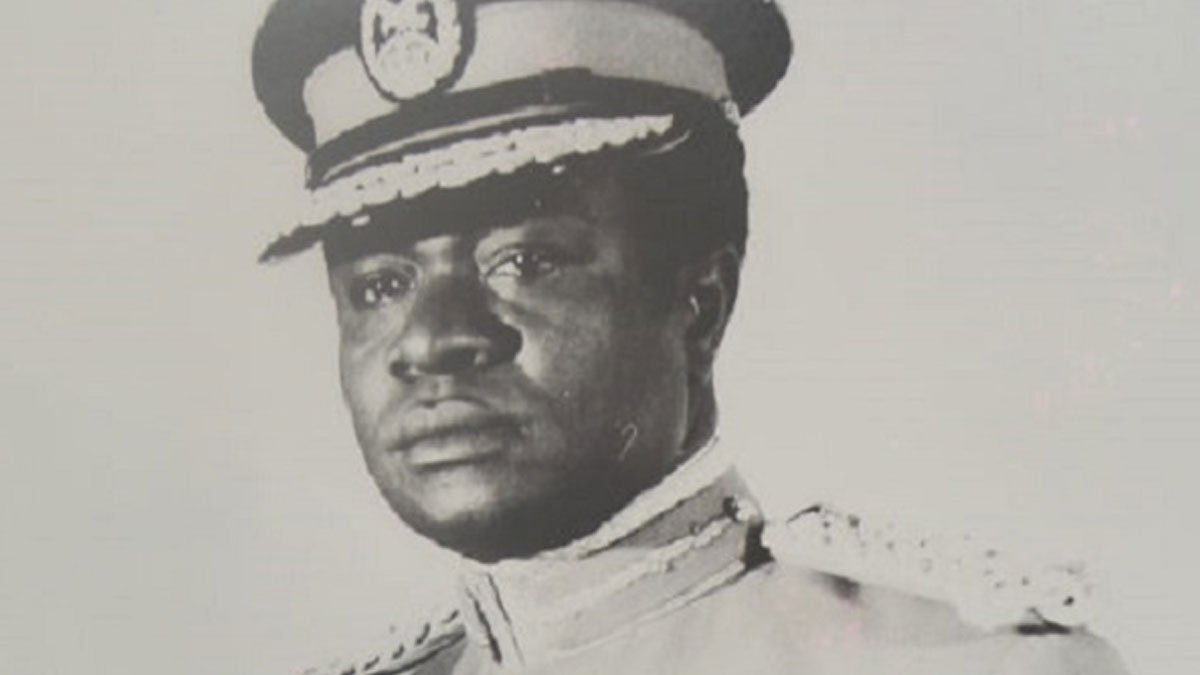
A prominent NRC Northern Ghana politician was Lt. Col. George Minyila, whose career in the military government would span the entire 1972–1979 period. Born on July 7, 1938, in Navrongo, Upper East Region, Minyila was educated at Tamale Senior High School before entering the Royal Military Academy Sandhurst, from which he graduated in 1962. His rise through the ranks placed him at the centre of military governance after the 1972 coup.
Minyila’s first political appointment came on January 28, 1972, when he was named Upper Regional Commissioner, a position he held until January 1, 1973. In this role, he was responsible for administering the Upper Region during the first year of the NRC rule, ensuring that the region’s needs were represented in Accra. He was then transferred to serve as Eastern Regional Commissioner from 1973 to 1975. In this capacity, he introduced significant reforms in Koforidua, including relocating the Zongo community from slums to planned settlements, paving the way for improved road networks in the regional capital.
The NRC also appointed regional commissioners to oversee the administration of the other regions, and northerners continued to serve in these roles throughout the 1970s. The presence of NRC Northern Ghana politicians like Minyila ensured that the North was not entirely excluded from governance, even as civilian political activity was suppressed.
During this period, traditional authorities played an increasingly important role in northern political life. Chiefs like Tolon Naa Yakubu Tali, who had served as Deputy Speaker of Parliament in the First Republic, and Gushie-Naa Bawa Andani Yakubu, who had represented the North on the NLC, continued to exercise influence in their communities. Their authority provided a degree of stability and continuity that formal political structures could not offer.
The Supreme Military Council (1975–1979): Continuity and Change
On October 9, 1975, Acheampong restructured the military government, dissolving the NRC and replacing it with the Supreme Military Council (SMC). The SMC was composed of fewer senior military officers, centralizing power in Acheampong and his closest associates. The change reflected Acheampong’s growing authoritarianism and his desire to sideline potential rivals.
Under the SMC, NRC Northern Ghana politicians continued to serve in key roles. When the SMC was formed, George Minyila was appointed Commissioner for Industries, a position he held from 1975 to 1976. In this capacity, he oversaw policies to revive Ghana’s manufacturing sector, which had suffered under the austerity of the Busia years. The government’s industrial strategy focused on import substitution and the promotion of local industries. However, implementation was often hampered by corruption and mismanagement.
Minyila’s career in the SMC continued with a brief stint as Commissioner for Local Government from May 31 to July 31, 1976. He was then appointed Director of Logistics at the Ghana Armed Forces in August 1976.
The SMC years also saw the introduction of several high-profile programmes. Operation Feed Yourself, launched in 1972, encouraged Ghanaians to cultivate their own food and aimed for national food self-sufficiency. In 1974, the government introduced the Ghana National Pledge, a daily recitation meant to foster national pride. On August 4, 1974, Ghana switched from left-hand to right-hand traffic under Operation Keep Right. This controversial move required extensive public education and signage changes. On September 1, 1975, the country began converting to the metric system.
Despite these initiatives, the SMC’s popularity declined as economic mismanagement took hold. The government printed money to finance its programmes, leading to high inflation. Corruption became rampant, with senior officers accumulating wealth through illegal deals. For the North, these economic difficulties meant shortages of basic goods, high prices, and the collapse of state-run services. The promise of “Operation Feed Yourself” was never fully realized, and the region remained the poorest in the country.
George Minyila: The Detained Commissioner
The political climate within the military became increasingly tense as Acheampong’s rule wore on. In 1977, a group of officers allegedly plotted to overthrow the government in what became known as the “One Man One Matchet” coup plot. George Minyila was among the 14 military officers arrested on suspicion of involvement. He was detained from 1977 until August 4, 1978, when he was released following the palace coup that brought General Frederick Akuffo to power.
Minyila’s detention was a dramatic turn for a man who had been a prominent **NRC Northern Ghana politician for five years. His release after the July 1978 coup that ousted Acheampong allowed him to return to public life. However, the SMC II led by General Akuffo would itself be overthrown by the Armed Forces Revolutionary Council (AFRC) in June 1979.
After the return to civilian rule in the 1990s, Minyila served as Ghana’s ambassador to Burkina Faso from 2001 to 2006 under President John Kufuor. He passed away in 2016, leaving behind a legacy as one of the most influential northern officers in Ghana’s military governments of the 1970s.
The Union Government Proposal and Northern Reactions
In 1977, Acheampong, seeking to legitimize his rule while avoiding a return to multi-party democracy, proposed a “Union Government” (Unigov) concept. Under this proposal, political parties would be abolished, and a single non-partisan government would be formed, drawing representatives from the military, police, and civilians. The idea was put to a referendum on March 30, 1978, which was widely seen as rigged to produce a favorable result.
The Union Government’s proposal divided Ghanaian political opinion. Many northern politicians, including those from the Danquah-Busia-Dombo tradition, opposed it, seeing it as a ploy to entrench military rule indefinitely. However, some northern traditional leaders, wary of the instability that party politics had brought, reportedly supported the idea. The debate deepened political tensions and contributed to the regime’s growing unpopularity.
In July 1978, Acheampong was forced to resign in a palace coup led by his deputy, General Frederick Akuffo. Akuffo established a new Supreme Military Council (SMC II) and promised a return to civilian rule. He lifted the ban on political parties and set a timeline for elections. This marked a significant shift, as it allowed political activity to resume after six years of military rule.
For northern politicians, the easing of restrictions was a welcome development. Figures like Simon Diedong Dombo, who had been banned from elective office, began to re-engage with political organizing, preparing for the elections scheduled for 1979. The northern political machinery, dormant since 1972, began to stir again. Meanwhile, the NRC Northern Ghana politicians who had served under Acheampong now faced an uncertain future as the nation prepared for a return to civilian government.
The Road to 1979: From SMC II to the AFRC
General Akuffo’s SMC II, which took over in July 1978, moved quickly to fulfill its promise of a return to civilian rule. A constituent assembly was convened to draft a new constitution, and political party activity was permitted. Elections were scheduled for June 1979.
However, the transition was not smooth. Discontent within the military was high, particularly among junior officers and non-commissioned officers who felt that the senior ranks had enriched themselves at the nation’s expense. On June 4, 1979, a group of young military personnel, led by Flight Lieutenant Jerry John Rawlings, staged a coup that overthrew the SMC II and established the Armed Forces Revolutionary Council (AFRC). The AFRC immediately initiated a campaign of public executions of senior military officers and former officials, including three former heads of state—Acheampong, Afrifa, and Akuffo—and several other high-ranking figures.
The AFRC held power for just over three months, but its impact on Ghanaian politics was profound. It purged the military of its senior leadership, executed several prominent figures, and set the stage for the Third Republic, inaugurated under the presidency of Dr. Hilla Limann in September 1979.
For the NRC Northern Ghana politicians who had served under Acheampong and Akuffo, the AFRC interlude was a time of danger. George Minyila, who had been detained in 1977 and released in 1978, survived the purges. Others, whose names are not recorded, may have been affected by the widespread detentions and dismissals that accompanied the AFRC’s “housecleaning.” The officers who had governed for seven years now saw their political influence abruptly end, as a new generation of military reformers took control.
Legacy of the NRC/SMC Years for Northern Ghana
The period from 1972 to 1979 left a complex legacy for Northern Ghana. On the one hand, the region had consistent representation in the military governments through NRC Northern Ghana politicians such as George Minyila, as well as regional commissioners and civil servants. This representation ensured that the North was not completely marginalized during a decade of military rule.
On the other hand, the suppression of political parties and civilian political activity halted the momentum that northern politicians had built during the Second Republic. The careers of experienced leaders like Dombo and Braimah were disrupted, and a new generation of northern politicians had to wait until the Third Republic to emerge. The economic mismanagement of the Acheampong years left the north poorer and more dependent on subsistence agriculture than it had been in 1972. The region’s infrastructure deteriorated, and the state services that had been slowly expanding under previous governments stagnated or collapsed.
Nevertheless, the northern political tradition proved resilient. When the AFRC handed over power to Dr. Hilla Limann in 1979, northerners were ready to resume their role in national governance. The Third Republic would see a northerner become president for the first time, and northern MPs would once again fill the parliamentary benches. The foundations laid by the pioneers of 1954, expanded during the First and Second Republics, and sustained during the NRC/SMC years, would support the highest achievement of northern political representation: the presidency of Dr. Hilla Limann.
Looking Ahead: The AFRC Interlude and the Third Republic
The NRC and SMC years came to an abrupt end on June 4, 1979, when Flight Lieutenant Jerry John Rawlings led a group of junior officers and soldiers in a bloody uprising that overthrew General Akuffo’s government. The Armed Forces Revolutionary Council (AFRC) that followed would be unlike any military government Ghana had seen—composed of junior ranks, committed to a radical “housecleaning,” and determined to return the country to civilian rule within months.
In Part Six of our series, we will explore how AFRC Northern Ghana figures—including Lance Corporal Peter Tasiri, who served on the AFRC itself, and Abayifa Karbo, the veteran Northern People’s Party founder who was appointed Commissioner for Agriculture—navigated this revolutionary period. We will witness the dramatic trials and executions of three former heads of state, the public whippings of alleged kalabule traders, and the eventual transition to the Third Republic under President Dr. Hilla Limann.
Through it all, northerners continued to play a part—on the council, in the regional administration, and as civilian commissioners. Their stories, often overshadowed by Rawlings’ commanding presence, are an essential part of the northern political journey.
Join us for Part Six: The AFRC Interlude (1979) – Rawlings’ First Coup and the Northern Presence, where we will meet the AFRC Northern Ghana figures who helped shape one of the most turbulent chapters in Ghana’s history.
Key Figures of the NRC and SMC Era
Lt. Col. George Minyila (1938–2016) was one of the most prominent NRC Northern Ghana politicians of the era. Born in Navrongo, he served as Upper Regional Commissioner (1972–1973), Eastern Regional Commissioner (1973–1975), Commissioner for Industries (1975–1976), and briefly as Commissioner for Local Government (1976). Like Nkegbe, Minyila held appointed positions within the military government; he never served as an elected Member of Parliament because parliamentary institutions were suspended from 1972 to 1979. He was detained in the 1977 coup plot and released in 1978. He later served as Burkina Faso’s ambassador (2001–2006).
General Ignatius Kutu Acheampong (1931–1979) was the leader of the 1972 coup and chairman of the NRC and SMC until his overthrow in 1978. An Nzema by ethnicity, he ruled Ghana for six years, implementing populist economic policies that eventually led to a crisis. He was executed by the AFRC in 1979.
General Frederick Akuffo (1937–1979) led the July 1978 coup that ousted Acheampong. He served as chairman of the SMC II until the AFRC coup in June 1979. He was also executed by the AFRC.
Other northern officers and administrators, including regional commissioners, district administrators, and civil servants, also served in the NRC and SMC governments. Their names, though not always preserved in the available records, helped maintain governance structures in the North during a turbulent decade.