Diaspora & Community
How Khaya AI is Weaving Africa’s Languages
Discover how Khaya AI uses ethical machine learning to rescue African languages from digital extinction. Explore its impact on culture, education, and economic empowerment across the continent.

In a small classroom in Accra, a teacher holds up her smartphone to a group of eager students. She speaks a sentence in crisp, fluent Gurune, and moments later, the device repeats it back in clear, printable English text. In a Nairobi market, a vendor finalizes a sale with a customer from another region, using an app to instantly translate product details. These are not scenes from a distant future; they are present-day realities powered by Khaya AI, a groundbreaking platform determined to ensure African languages are not relics of the past, but living, working tools of the digital age.
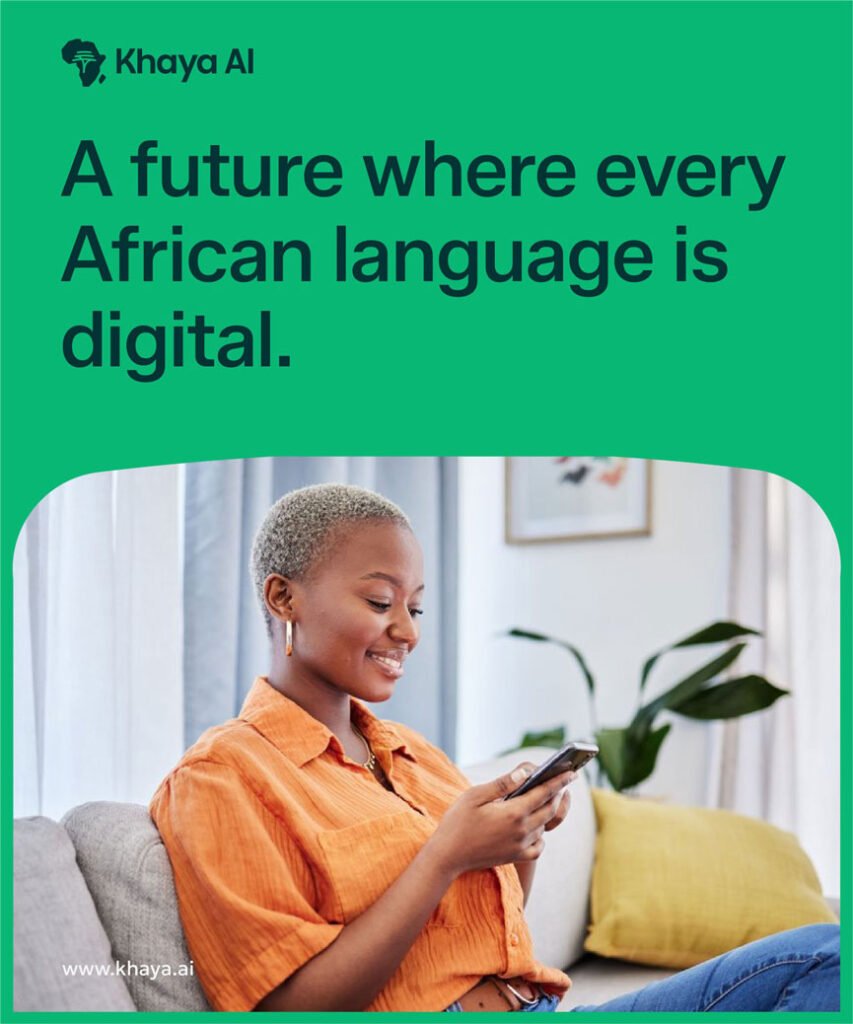
For centuries, the rich tapestry of over 2,000 African languages has been transmitted orally, carrying within it history, philosophy, and identity. Yet, in the 21st-century digital revolution, this vast linguistic heritage faced a silent crisis: digital extinction. Mainstream technology platforms, built on data-scarce models, largely ignored these languages, creating a profound disconnect. While the continent leapfrogged into the mobile era, its foundational cultures risked being left behind in a digital silence.
Khaya AI, whose name evokes concepts of “home” and “seed” in several African languages, emerged as a direct response to this void. It is more than a translation tool; it is a cultural reclamation project powered by cutting-edge machine learning, designed to translate and recognise speech in languages that global platforms have historically overlooked.
Bridging the Digital Divide, One Word at a Time with Khaya AI
At its core, Khaya AI tackles the practical problem of communication and access. The platform provides a suite of tools that feel magical in their simplicity yet are complex in their engineering: machine translation, text-to-speech, and automatic speech recognition (ASR). A user can speak, type, or upload a file in one African language and receive an instant, accurate conversion into another. For a student researching online, this means accessing global knowledge in their mother tongue. For a small business owner, it means creating invoices and marketing materials for a broader, linguistically diverse audience. For developers in Lagos or Kigali, it provides the essential building blocks for developing the next generation of locally relevant “super-apps.”
What sets Khaya apart is its foundational commitment to inclusive technology. The team builds for languages that were previously “unserved” in the digital realm. Their approach demonstrates that world-class accuracy is not the sole preserve of languages with billions of data points. In fact, Khaya AI’s Yoruba translator has been shown to outperform Google Translate, a titan in the field, as measured by industry-standard metrics such as BLEU scores for translation quality. This achievement is a powerful rebuttal to the assumption that low-resource languages cannot support high-quality AI.
The Engine of Progress: Community and Continuous Learning
The magic of Khaya AI does not stem from a closed lab in Silicon Valley, but from a dynamic, responsive dialogue with its users. The platform embodies a philosophy of continuous, community-informed improvement. It learns from tens of thousands of user feedback submissions, using this input to fine-tune its models and guide its expansion. The addition of Dagbani translation and speech recognition, for instance, was a direct result of listening to and prioritizing users’ needs in northern Ghana.
This model creates a virtuous cycle. As more people use the tools for real-world problems—a doctor transcribing patient notes in Igbo, a radio journalist converting an interview in Swahili to text—the system grows more intelligent and more attuned to the nuances of dialect, context, and cultural meaning. It is a form of participatory digital preservation, where the community actively shapes the technology that serves it, ensuring the AI reflects the living language as it is spoken in homes and markets, not just as it is theorized in textbooks.
More Than Translation: A Cultural and Economic Catalyst
The implications of this work extend far beyond convenient translation. Khaya AI functions as a multifaceted catalyst:
For Cultural Heritage: It offers a robust mechanism for documentation. Elders’ stories, ancient proverbs, and ceremonial speeches can be transcribed, translated, and archived with unprecedented ease, creating searchable digital repositories for future generations. Text-to-speech features give these languages authentic digital voices, allowing for audiobooks, educational content, and interactive learning tools that keep the languages vibrant and audible.
For Education: It breaks down a fundamental barrier to learning. A child can engage with digital educational content in the language they understand best, reinforcing literacy in their mother tongue while bridging to others. It empowers teachers to create locally relevant materials, moving beyond a one-size-fits-all, often Eurocentric, digital curriculum.
For Economic Empowerment: It democratizes opportunity. A craftswoman in Dakar can now seamlessly list her products online with descriptions in Wolof, French, and English, reaching a global market. It lowers business and governance costs by enabling clear communication across linguistic barriers within incredibly diverse nations.
The recognition of Khaya AI’s vital role is growing on the global stage. In 2024, it was honored with a World Summit Award (WSA) in the Culture and Heritage category, a testament to its successful fusion of technology with profound cultural impact.
The Road Ahead: Seeding a Multilingual Digital Future with Khaya AI
The journey is far from complete. Supporting the staggering diversity of African languages, each with its own dialects, oral traditions, and syntactic complexities, is a monumental, ongoing task. Challenges of data collection, computational infrastructure, and funding persist. Yet, Khaya AI has planted a crucial seed and demonstrated a viable path forward.
The ultimate vision is a future where the digital landscape of Africa is as linguistically rich as its physical one. A future where a farmer in rural Kenya gets vital climate information via a voice assistant in Kikuyu, where a filmmaker can subtitle her work into Kasem with a few clicks, and where a programmer’s first interaction with code could be through voice commands in Mende.
Khaya AI is building more than a platform; it is building infrastructure for cultural sovereignty in the 21st century. By weaving African languages into the very fabric of the digital world, it is ensuring that as the continent strides into the future, it does so with the full, resonant power of its own voices—spoken, heard, and preserved for all time. It is a testament to the idea that true technological advancement does not erase identity. Still, it amplifies it, proving that in the global conversation, every language and every voice are essential.