Culture & Heritage
Ghana’s Third Republic: When a Northern Man Became President

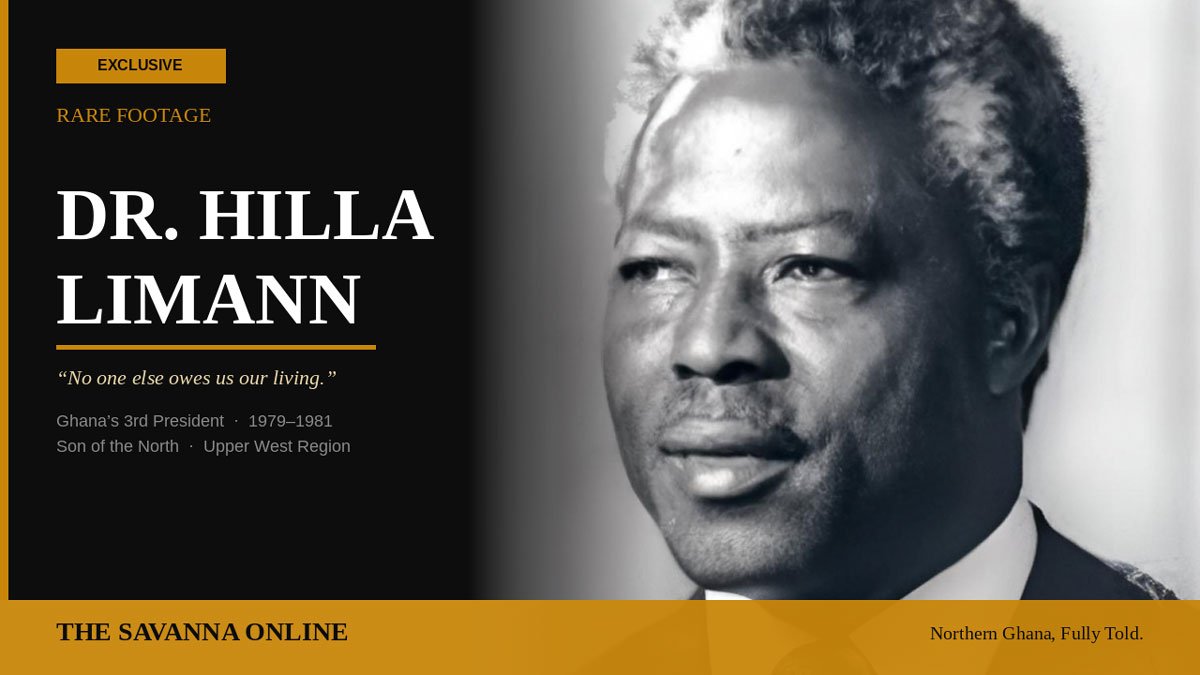
Ghana’s Third Republic lasted only twenty‑seven months. Yet, it achieved what no previous government had: a northerner in the highest office of the land. Dr. Hilla Limann—a career diplomat from Gwollu in the Upper West Region—became President on 24 September 1979. Over thirty northern MPs joined him in parliament. Their achievement capped a twenty-five-year struggle that began in Tamale with the formation of the Northern People’s Party.
Here is Part Seven of The Savanna Online’s exclusive series on the political architects of Northern Ghana.
Part One introduced the founders of the Northern People’s Party (1954). In the Part Two of this series, we covered the First Republic (1960–1966). Part Three examined the National Liberation Council (1966–1969). Then Part Four looked at the Second Republic (1969–1972). Part Five analyzed the NRC and SMC years (1972–1979). Part Six focused on the AFRC interlude (1979). Now, Part Seven turns to the democratic experiment that followed—Ghana’s Third Republic.
Table of contents
- How Ghana’s Third Republic Came to Be
- The Scholar from Gwollu: President Hilla Limann
- Northern MPs During Ghana’s Third Republic
- Northern Region – 14 Seats
- Upper Region – 16 Seats
- Northerners in the Limann Cabinet
- Challenges That Shortened Ghana’s Third Republic
- The Coup That Ended Ghana’s Third Republic
- Legacy of Ghana’s Third Republic for the North
- The PNDC Era and Beyond
- Key Figures of Ghana’s Third Republic
How Ghana’s Third Republic Came to Be
The Armed Forces Revolutionary Council (AFRC), led by Flight Lieutenant Jerry John Rawlings, seized power on 4 June 1979. Despite its revolutionary rhetoric, the AFRC honored its promise to return the country to civilian rule. Elections were held on 18 June 1979—just two weeks after the coup.
Five parties contested the elections. The People’s National Party (PNP) claimed to represent the Nkrumahist heritage and nominated Dr. Hilla Limann as its presidential candidate. The PNP’s vice‑presidential candidate was Professor Joseph W. S. de‑Graft Johnson, an economist from the Central Region.
The presidential election required a second round. Limann won 35.3% of the vote in the first round, while Victor Owusu of the Popular Front Party (PFP) secured 29.9%. The second round on 9 July 1979 proved decisive: Limann won 62.0% of the vote, a landslide victory that reflected the nation’s desire for a fresh start.
In the parliamentary election, the PNP won 71 of the 140 seats in the National Assembly—an outright majority. Northern support was essential to the PNP’s victory.
On 24 September 1979, Dr. Hilla Limann was sworn in as President. Ghana’s Third Republic had begun.
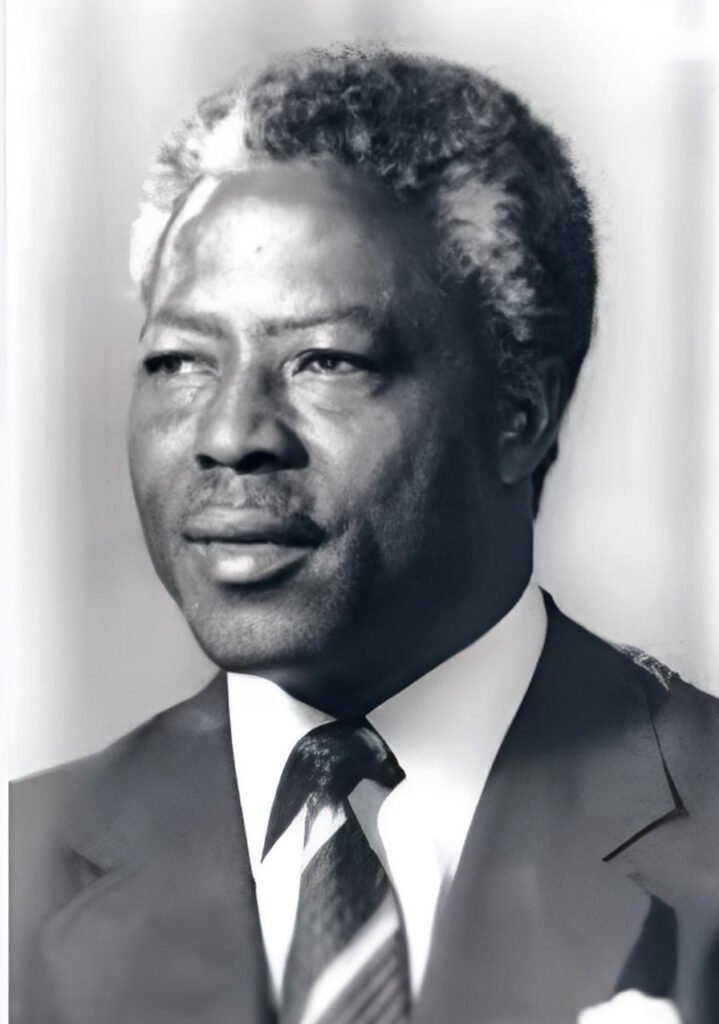
The Scholar from Gwollu: President Hilla Limann
Hilla Limann was born on 12 December 1934 in Gwollu, a small town in what is now the Upper West Region. His original surname was Babini. He came from a low-income family; his father was a blacksmith. Limann’s rise from these humble beginnings to the presidency is one of the most remarkable stories in Ghanaian political history.
He attended the Lawra Confederacy Native Authority Primary Boarding School (1941–1945) and the Tamale Middle Boarding School (1946–1949). He then trained as a teacher at the Tamale Teacher Training College. His thirst for knowledge took him abroad: he studied at the London School of Economics and the University of Sorbonne in France, earning a doctorate in political science and law.
Limann joined the Convention People’s Party (CPP) in the 1950s. He worked as a teacher before entering the Foreign Service. Limann also served as Head of the Europe Desk at the Ministry of Foreign Affairs (1965–1968). He was a member of the Constitution Commission that drafted the 1969 Constitution. Later, he served as a diplomat in Lomé and at Ghana’s Permanent Mission to the United Nations in Geneva. By 1979, he was a respected civil servant—not a seasoned politician—but his integrity and competence made him an attractive candidate for the PNP.
Limann took office, determined to govern with integrity. He refused to enrich himself or his family. Years later, he would be remembered as “one of Africa’s most unblemished and dignified leaders—remembered for his integrity, humility, and unwavering commitment to democratic governance”. He passed away on 23 January 1998 at the Korle‑Bu Teaching Hospital.
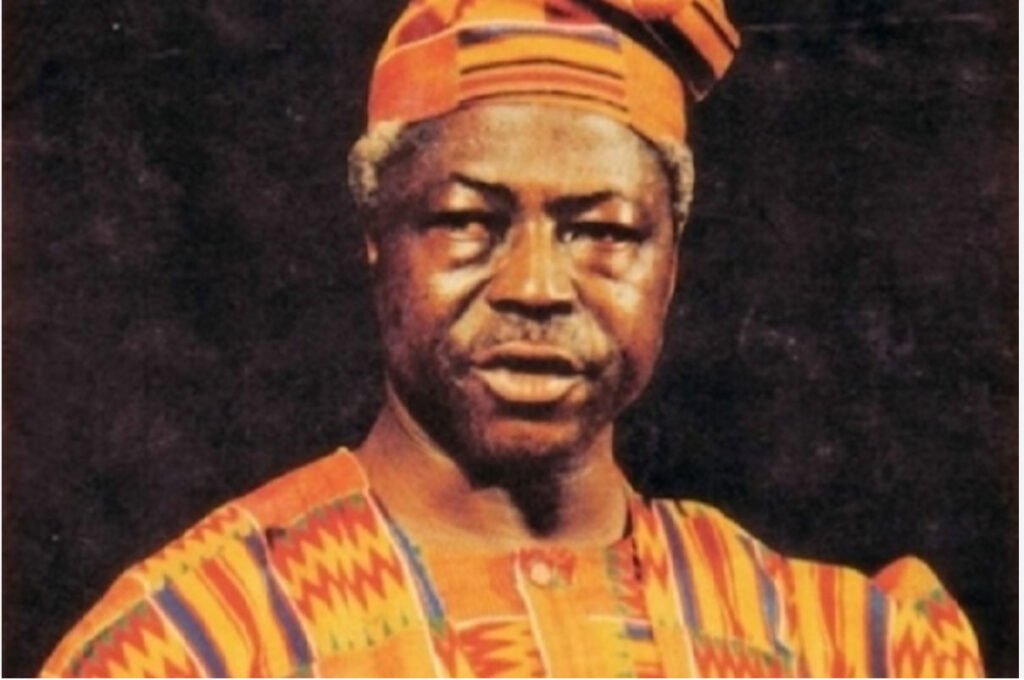
Northern MPs During Ghana’s Third Republic
The June 1979 election produced a strong northern contingent in the National Assembly. Across the Northern and Upper Regions, voters elected MPs from several parties, but the PNP dominated.
Northern Region – 14 Seats
| Constituency | Elected MP | Party |
|---|---|---|
| Bunkpurugu | John Laar Nurokina | PNP |
| Gonja East | Francis Kwame Donkor | PNP |
| Gonja Central | Seidu Zakaria | PNP |
| Gonja West | Yakubu Saaka | PNP |
| Nalerigu | Mahama Edmond Dramani | PNP |
| Namumba | Adam Marshal Adu | PNP |
| Walewale | John S. Nabila | PNP |
| Chereponi | Samuel U. Dalafu | PFP |
| Gushiegu | Abdulai Al‑Hassan | PFP |
| Tolon | Rowland Issifu Alhassan | PFP |
| Yendi | Shani Alhaji Mohammed | PFP |
| Mion‑Nanton | Oliver Sigli Mahamudu | SDF |
| Savelugu | P. W. Iddrisu Ardani | SDF |
| Tamale | Alhaji Abubakar Alhassan | SDF |
Upper Region – 16 Seats
| Constituency | Elected MP | Party |
|---|---|---|
| Bawku | Frank Abdulai Ayariga | PNP |
| Bawku West | Mathias K. Atubiga | PNP |
| Bolgatanga | Awulimbond Nicholas Adamboe | PNP |
| Bongo | Asoko Asampambila | PNP |
| Chiana‑Paga | Kubaje Andrea Amidila | PNP |
| Jirapa‑Lambussie | Dyyaka S. Bawa | PFP |
| Lawra | Gandaa Naabomo | PNP |
| Nadowli | J. I. Asaman | PNP |
| Navrongo | Noble A. M. Bayeridzoa | PNP |
| Sandema | Paul Oscar Anala | PNP |
| Talensi | Colonel David Zanlerigu | PNP |
| Tampane‑Garu | Dominic A. Akudago | PNP |
| Tumu | John Kofi Benin | PNP |
| Wa | Abdul Moomin Alhaji | PNP |
| Wa East | Sakara Adam Badoun | PNP |
| Zebilla | Agbango G. Akeya | PNP |
Notable among these MPs were John S. Nabila (Walewale), an academic who later became President of the National House of Chiefs, and Colonel David Zanlerigu (Talensi), a former military officer who would serve as a minister.
Altogether, Ghana’s Third Republic parliament included 30 MPs from the two northern regions—14 from the Northern Region and 16 from the Upper Region—plus other northerners elected from constituencies elsewhere. This was the largest northern parliamentary contingent since the pre‑independence era.
Northerners in the Limann Cabinet
President Limann appointed a cabinet that reflected the nation’s diversity while drawing on northern talent. Two northerners held significant portfolios:
| Name | Portfolio | Period |
|---|---|---|
| Colonel David Zanlerigu (MP for Talensi) | Minister for Works and Housing (1979–1980); later Minister for Industries, Science and Technology (1980–1981) | September 1979 – December 1981 |
| Adisa Munkaila | Minister for Labour, Youth and Social Welfare | November 1980 – December 1981 |
Colonel David Zanlerigu was the most prominent northerner in the cabinet. He first oversaw infrastructure projects; later, he was reassigned to industries and technology. Adisa Munkaila, a female northerner, managed labor and youth affairs.
Other key portfolios—Foreign Affairs, Defense, Interior, and Finance—were held by southerners. This showed that the PNP was a national party, not a regional one. Yet the presence of northerners in the cabinet ensured that the North’s interests were represented at the highest level.
Challenges That Shortened Ghana’s Third Republic
The Limann government inherited a battered economy. Inflation was high, foreign reserves low, and public debt heavy. Global oil shocks and recession worsened the situation. Limann’s moderate, technocratic approach sought to restore fiscal discipline and rebuild credibility with international lenders. But his administration faced several structural weaknesses:
- A weak governing coalition. Opposition parties, especially the PFP, subjected the government to persistent criticism.
- Economic stagnation. Growth remained sluggish, and shortages of basic goods continued.
- Military discontent. Junior officers who had supported the AFRC coup watched Limann with suspicion, believing he was too slow to address their grievances.
- The burden of expectation. When the economy did not improve rapidly, public support waned.
Northern MPs faced a particular dilemma. They had campaigned on promises of development for the North—roads, schools, clinics, jobs. Limited resources meant many of those promises went unfulfilled. The gap between the North and the South did not narrow.
The Coup That Ended Ghana’s Third Republic
On the night of 31 December 1981, Rawlings launched a second coup. His forces arrested President Limann, confiscated his passport, and detained him for over a year. Rawlings denounced the Limann regime as unable to resolve Ghana’s economic dependency and corruption. He established the Provisional National Defense Council (PNDC), with himself as Chairman.
Ghana’s Third Republic had lasted just 27 months. It fell not to corruption or incompetence, but to the structural weakness of a nation still searching for political stability.
The coup was widely condemned. Many Ghanaians had hoped that the 1979 elections would mark a permanent break with military intervention. Limann—a man of unimpeachable integrity—became a symbol of lost democratic promise.
Legacy of Ghana’s Third Republic for the North
Though short, Ghana’s Third Republic left a profound legacy for Northern Ghana.
First, it proved that a northerner could occupy the highest office in the land. Hilla Limann’s presidency shattered the assumption—implicitly held by many—that the presidency was reserved for southerners. His election validated the generations of northern political architects who had fought for representation since 1954.
Second, the 30 northern MPs represented the region’s political maturity. They chaired committees, debated legislation, and held the government accountable. Their presence was no longer exceptional; it was normal.
Third, Limann’s integrity set a standard. He refused to enrich himself or his family. His reputation as an “unblemished” leader endures, a quiet rebuke to those who followed.
Yet the Third Republic also revealed the fragility of Ghana’s democracy. The ease with which a military officer could overthrow a constitutionally elected government—twice in three years—showed that civilian rule would survive only if backed by a disciplined military and a resilient economy.
The PNDC Era and Beyond
After the coup, Rawlings ruled for another twelve years under the PNDC and then as elected President of the Fourth Republic. Northerners would continue to serve in those governments—as PNDC secretaries, as ministers, and eventually as vice president and President.
Part Eight of our series will examine PNDC Northern Ghana figures like Alhaji Iddrisu Mahama and John Ndebugre. Part Nine will cover the Fourth Republic.
For now, Ghana’s Third Republic stands as a milestone: brief, hopeful, and ultimately tragic—but a testament to what the political architects of the North had built.
Key Figures of Ghana’s Third Republic
Dr. Hilla Limann (1934–1998): Eighth President of Ghana, first northerner to hold the office. A career diplomat and academic, he served as President from 24 September 1979 to 31 December 1981.
Colonel David Zanlerigu: MP for Talensi; Minister for Works and Housing (1979–1980); Minister for Industries, Science and Technology (1980–1981).
Adisa Munkaila: Minister for Labor, Youth and Social Welfare (November 1980 – December 1981).
John S. Nabila: MP for Walewale; later Wulugunaba of Kpasenkpe and President of the National House of Chiefs.
Professor Joseph W. S. de‑Graft Johnson: Vice President throughout the Third Republic.
30 northern MPs are listed in the parliamentary records of that period of Ghana’s political history.